Chain and sprockets are the cheapest performance on a minimoto and the most ignored — hidden under a greasy cover, wearing out a tenth at a time, until race day explains the lesson at full price. Here is the care rhythm and the tuning secret.
The rhythm
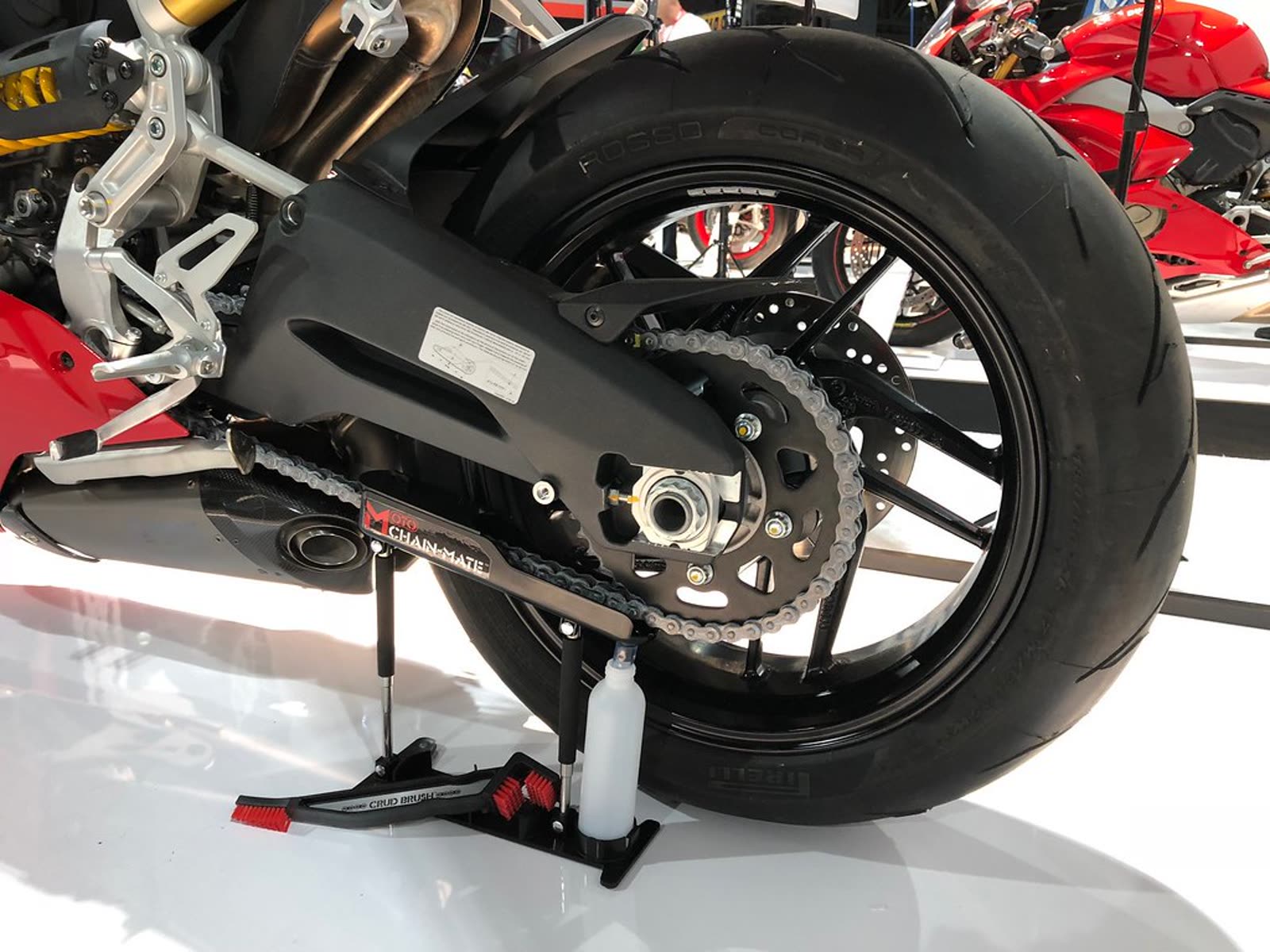
Clean, lube, tension — three jobs, one bench, after every riding day. Clean: a proper chain brush and degreaser, because new lube over old grit is polishing a sandbelt. Lube: warm the chain if you can, lube the inner side where centrifugal force works it into the rollers, wipe the excess — a flinging chain is an over-lubed one, and the rear rim tells everyone at the track how your maintenance week went. Tension: to the manual's spec at the manual's measurement point, with the suspension loaded the way the bike actually rides — and here is the detail everyone misses: check tension at several points around the chain's rotation. Chains wear unevenly; the spot that is right at the master link can be a quarter-inch wrong half a turn later. Set to the tightest spot, not the average.
Reading wear
Chains and sprockets wear as a set and announce it honestly. The chain: pull a rear link off the rear sprocket's teeth — if it lifts enough to see daylight under the rollers' feet, the chain is stretched past service. Kinked or tight spots that will not adjust out, rust that survives cleaning, rollers that spin gritty: replace. The sprockets: teeth should be symmetrically rounded, hook-free — "shark-fin" teeth with hooked tips and asymmetric valleys have been eating your chain and your horsepower. Replace as a set, always — a new chain on worn sprockets wears at the old sprockets' pace, which is paying for a chain twice.
Gearing as tuning
The fun secret: those same sprockets are the cheapest, fastest setup change in racing. A tooth off the front (countershaft) is a bigger step than a tooth or three on the rear — front changes are coarse, rear changes are fine, and the math is leverage: lower gearing (smaller front, bigger rear) trades top speed for acceleration; higher gearing does the opposite. Where it pays: a tight track with no straight rewards lower gearing out of corners; a fast flowing circuit rewards a taller top end. And it is rider-specific: two riders on identical bikes can legitimately gear differently for how they each make time. This is the worked example of the gearing-for-Shannonville thinking — what a tooth changes, felt and measured, with a tire-gauge budget instead of a suspension budget.
What a worn chain does to a race day
Skips under hard acceleration (the rider thinks the clutch is going), eats horsepower in the driveline, whips and derails at the worst moment, and eventually snaps — taking cases with it on some minis. Every one of those outcomes costs more than the chain. The drive train is not a maintenance item; it is the connection between everything the engine makes and everything the wheel gets. Drive it, don't drag it.