The 160 is where junior road racing stops being adorable. The bikes are quicker, the grids are tighter, the racing is genuinely close — and the riders who figure out the 160 arrive at the 190 conversation with real skills. This is what changes in the class, for the rider and for the parent watching.
What the class is
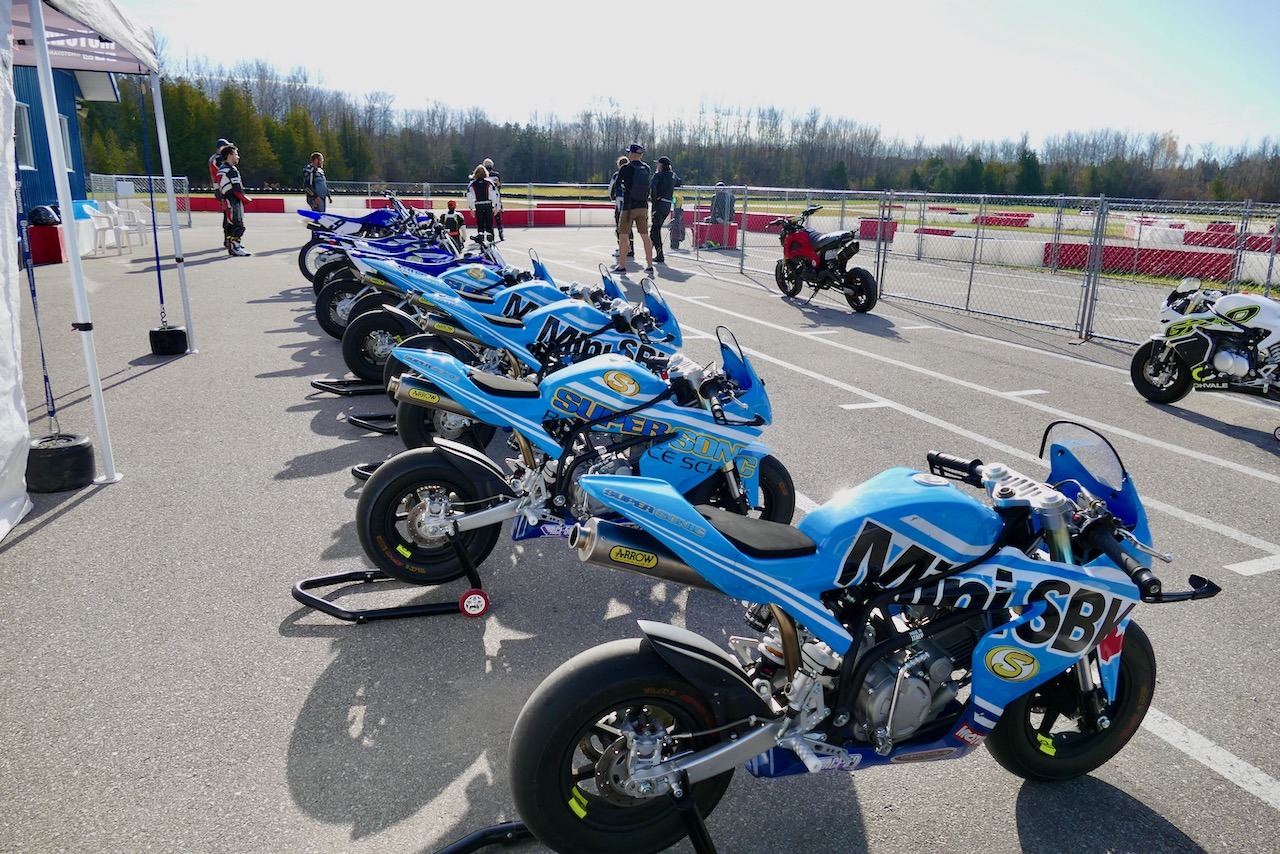
The Ohvale 160s sit in the middle of the mini road-racing ladder: enough power to punish sloppy throttle hands, enough pace that lap time comes from technique rather than bravery, and grids full of kids who all had to graduate through the smaller classes to get there. The racing is the story — in our experience the 160 races are the closest on the card, decided by braking and lines rather than straights, because the machinery is equal enough to make the rider the variable.
What changes for the rider
Brake discipline becomes the skill. The 160 has enough motor that corner entry is where races are won — riders learn to brake late, trail off properly, and carry roll speed, because the alternative (stopping the bike and gassing it) simply does not work at this level. Gearing becomes a choice, not a setting: kids start learning what a tooth on the front or rear does at a specific track, which is gearing-for-Shannonville thinking in its first form. And racecraft sharpens — with the field this close, defending and attacking are constant skills, practiced every lap rather than once a weekend.
Physically it asks more: harder braking zones and faster corner entries mean the rider's core and legs do real work. The fitness habits that pay off later start mattering here.
What parents should watch
The move to 160 lands differently for every kid, and the honest signs a rider is thriving are enjoyment plus gradual lap-time consistency, not wins in the first month. What to watch for before moving a rider up: are they riding the 110-sized machine at its limit — braking as late as the bike allows, using every bit of the track — or just circulating on it? A rider who has maxed the smaller class is ready for the problem the 160 poses. A rider who is still learning the smaller bike's lessons will just carry those gaps forward at higher speed.
And once they are in the class: the paddock support changes. Setup conversations become real — tire pressures, sag, gearing per track — and the family that treats the 160 season as a chance to learn those skills together is building the toolbox the 190 and beyond will demand. Our transition post covers the 160-to-190 step; this class is where you prepare for it.
Why this class specifically
Ask the families who have been through it: the 160 season is the one riders remember. The racing is close enough to be addictive, the bikes are cheap enough to campaign properly, and the skills are foundational enough that every fast 190 rider you will ever watch got there through a 160 paddock. It is the class where racing clicks — where the kid stops riding a small motorcycle and starts racing one. Bring the popcorn. You will need it.