The GP-0 is the smallest thing Ohvale makes, and it is the one that decides whether a kid stays in this sport or quietly drifts out of it.
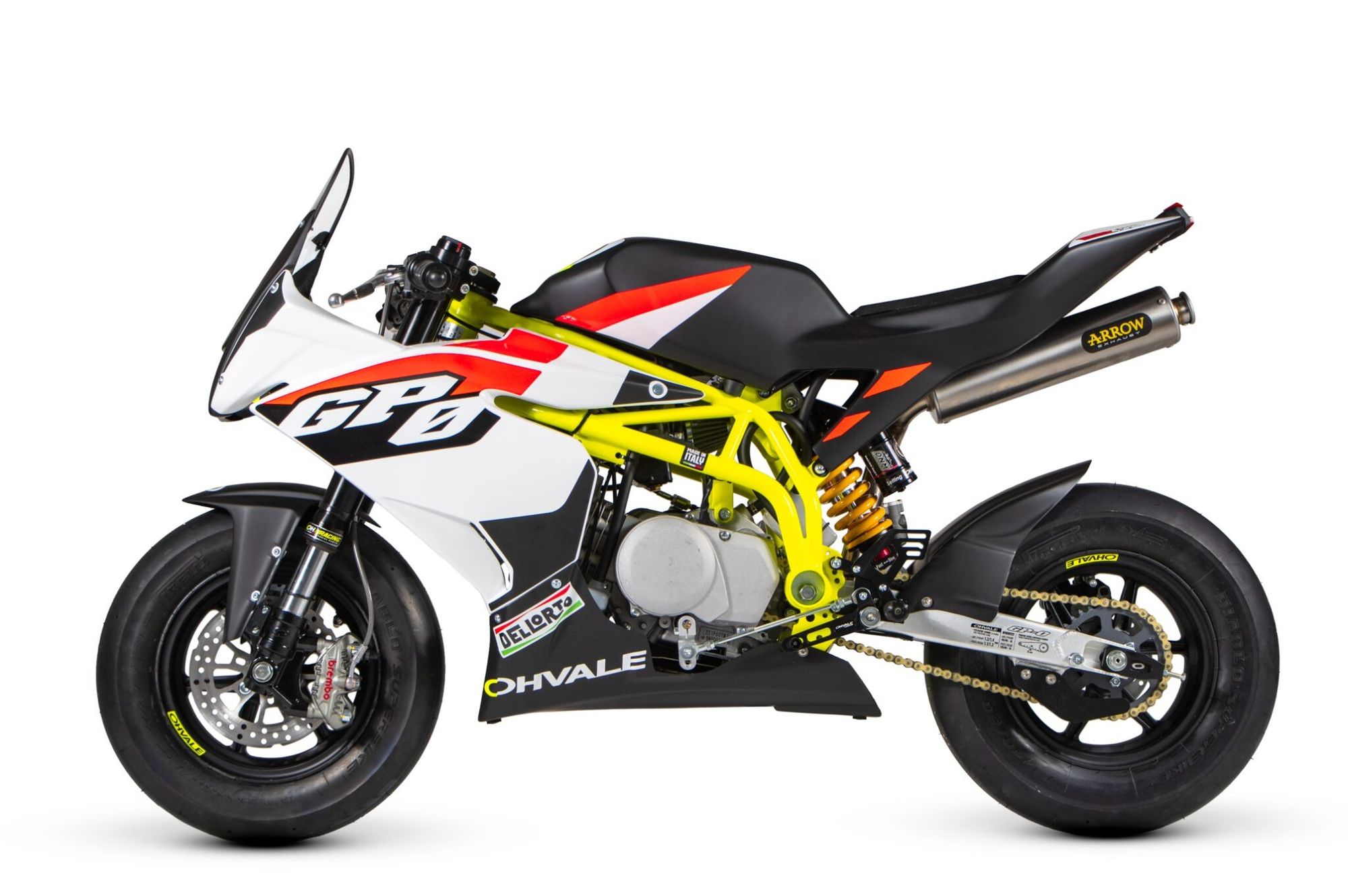
It rolls on 10-inch wheels. Claimed weight is about 150 pounds, the seat sits around 27 inches, and the wheelbase is roughly 42 inches. Those are the numbers that matter, and none of them are about speed. They are about whether a child can hold the thing up at a standstill, paddle it out of a pit box, and pick it up off the ground without an adult running over.
Three engines, and one of them is the clever one
The GP-0 comes with a 110, a 160, or the 187 cc that everyone calls the 190. The two smaller engines are Zongshen units; the 190 is a Daytona, built in Japan, and it gets an oil cooler. All of them are air-cooled four-valve singles. Across the whole GP-0 range Ohvale quotes somewhere between 8 and 25 horsepower, which tells you how far apart the ends of it are.
The interesting one is the 110, because it can be had as an automatic with electric start.
That sounds like the beginner-toy version of the bike. It is not. It means a kid can be taught racing lines, braking points, body position and how to look through a corner without simultaneously being taught a gearbox. Those are two genuinely separate skills, and asking a seven-year-old to learn both at once is how you get a kid who is frightened of the bike and cannot say why.
Take the gearbox out of the equation and the only thing left to think about is where the bike is pointed. Add it back a season later, on the same chassis, with the lines already in muscle memory.
What it is not
It is not a plaything, and the spec list makes that awkward for anyone hoping it might be. Four-piston front caliper on a 180 mm disc, PMT race rubber, a four-speed box on everything but the auto. This is a small racing motorcycle, and it will do what a racing motorcycle does if it is ridden badly.
It is also not a bike your kid keeps. The GP-0 is sized for a child, and children are a moving target. The lengthened Evo versions push the ergonomics out far enough that adults ride them, which extends the runway, but the honest planning assumption is that a growing rider moves to 12-inch wheels inside a couple of seasons.
Why it is the important one anyway
Every rung above this is easier to sell. A bigger bike is faster, looks more serious, and photographs better in the paddock.
But the GP-0 is where a kid finds out whether they actually like this — not whether they like the idea of it, or the leathers, or the trailer. Put a child on a machine that is too tall, too heavy and too fast for them and you will get an answer, and it will be the wrong answer, and you will not know it was the bike that gave it to you.
Start them on something they can physically manage. Everything else on the ladder assumes you did.